
When References Mislead: Verification, AI Attribution, and Academic Bullying in Scholarly Evaluation
 Carlos Heredia Chimeno
Published 2026-02-27
Keywords
- Artificial Intelligence,
- Bullying,
- AI ethics
Copyright (c) 2026 Carlos Heredia Chimeno (Author)

This work is licensed under a Creative Commons Attribution-NonCommercial 4.0 International License.
Abstract
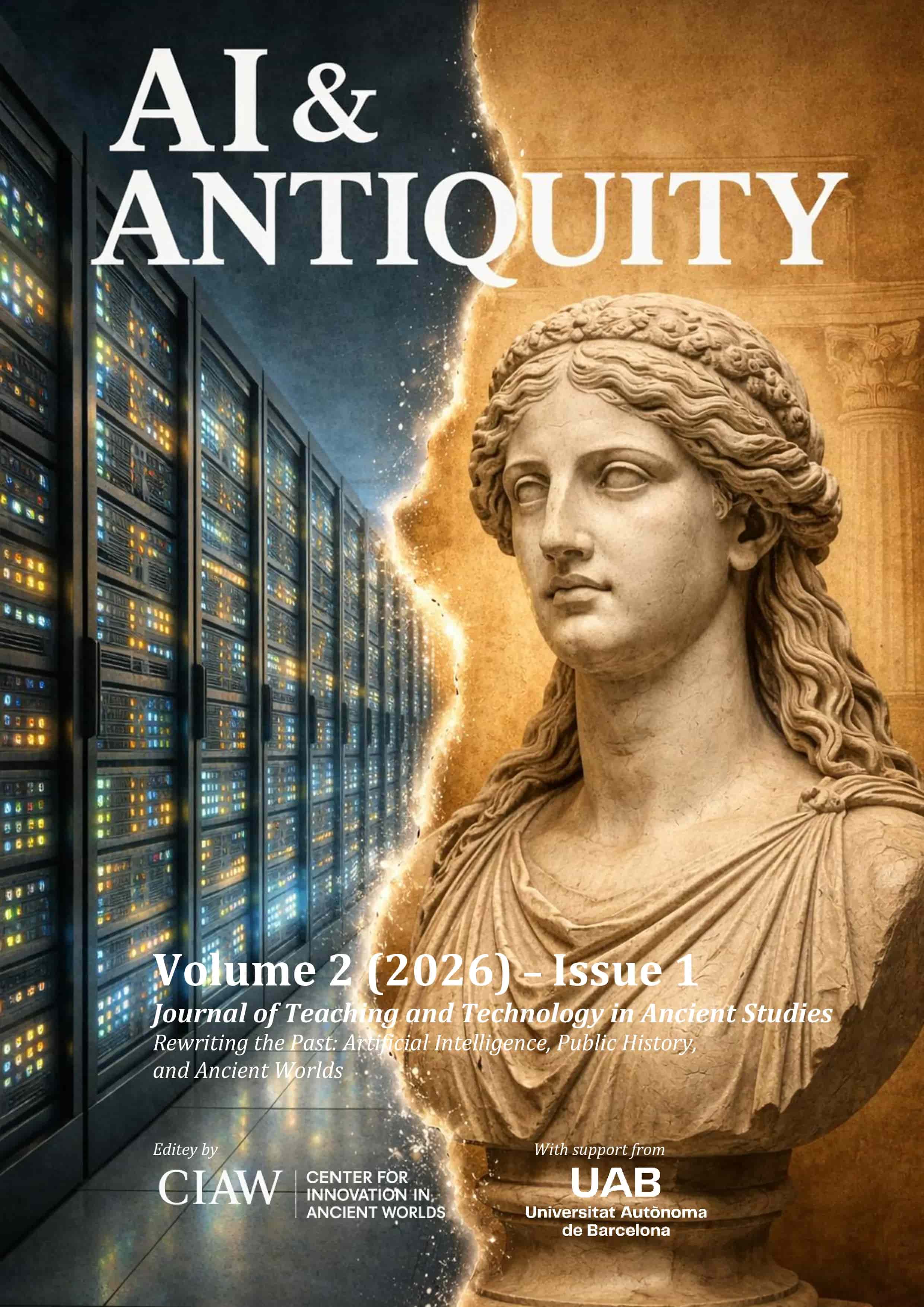
This editorial introduces Volume 2, Issue 1 (2026) of AI & Antiquity, which examines the epistemic and institutional implications of artificial intelligence for Ancient Studies. Rather than adopting celebratory or alarmist positions, the issue frames AI as a negotiated space between pedagogy and research, automation and responsibility, and innovation and scholarly trust. The contributions explore AI as a cognitive mediator in the classroom, a methodological instrument in historical inquiry, and a force reshaping cultural memory, historiography, and public heritage discourse. Emphasis is placed on verification, reflexivity, and critical literacy as core scholarly competencies in AI-assisted environments.
The volume also addresses emerging structural challenges, including bibliographic hallucinations, shifting editorial accountability, and the weaponisation of generative systems for reputational harm as a form of technologically mediated academic bullying. By situating these phenomena within broader frameworks of platform governance and institutional ethics, the issue advocates for methodological vigilance, transparent pedagogical practices, and shared regulatory adaptation. Structured as a progression from mediation to method and from memory to inclusion, the volume invites sustained critical engagement with AI as a transformative condition of contemporary knowledge production in Ancient Studies.